
DIYbeginners

Explore Projects

how to patch holes in drywall step by step
Explore Projects

Step-by-Step Instructions for Patching Holes in Drywall: A Complete Guide for Different Hole Sizes

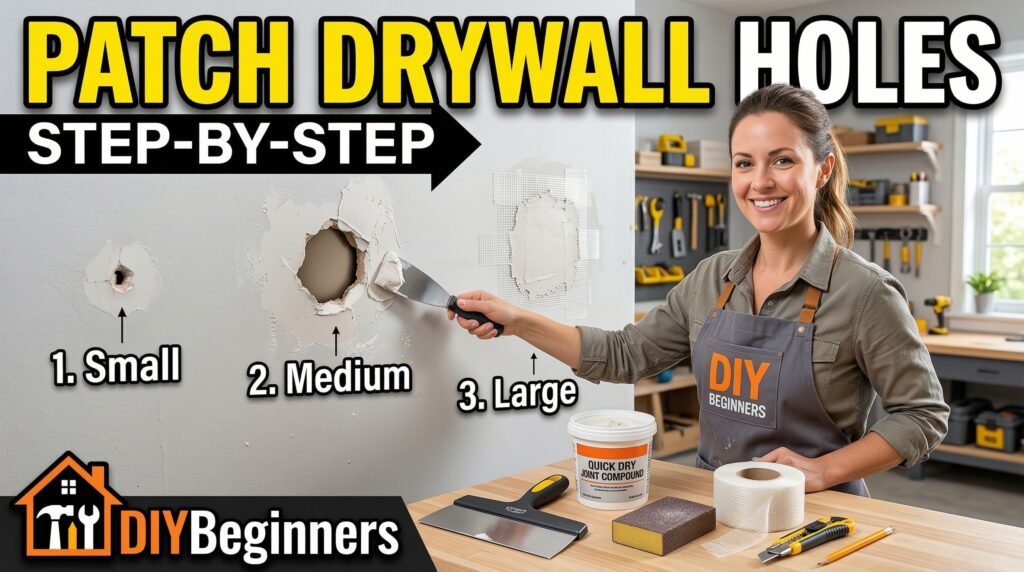
A hole in the wall is a much bigger problem than it really is. The first time I had to deal with a problem like this, a doorknob had basically punched a hole through the wall. It looked terrible. I had to call someone, it was going to cost me money, and I had to wait a week for a repairman to come out to my house. It ended up being a simple fix that I could have done myself in an afternoon. I only had to spend about $12 to fix it. The next morning, the wall looked like new again. I remember stepping back from the wall and not being able to see where the hole had been. There is no better feeling than that. The best way to fix a hole in your drywall is to know which method to use to fix your particular hole. A nail pop is a different fix than a hole that is the size of a fist. Once you know which method is best for your particular problem, it is a simple fix that is inexpensive and invisible. This article will discuss all 5 different sizes of holes that you could have. What Causes Drywall Damage and Why It’s Simple to Fix The white material on our walls, called drywall, sheetrock, or gypsum board, is something that is an almost universal feature in every house in America. Drywall is composed of a gypsum plaster core covered by two pieces of paper on each side. This makes it easy to install, easy to finish, and yes, easy to damage. Doorknobs, furniture, accidents, water damage, and yes, something as innocent as pulling out a nail or two can leave their marks on our walls. Fortunately, the good news is that while drywall is easy to damage, it is also easy to repair. The fundamental idea behind repairing drywall is that you’re not repairing anything except the surface. That’s it. That’s all there is to it. Key Insight: Drywall is an almost universal feature in every house in America, according to the Census Bureau, making up more than 97% of all new residential construction in America. What You’ll Need — Tools and Materials What you need depends on the size of the hole. Here’s the complete list — you won’t need everything for every repair. Tools Materials Pro Tip: The pre-mixed joint compound in a small tub with a purple lid at Home Depot dries faster and is easier to sand than the standard compound. It is almost the Same price. Step 1. Identify Your Hole Size The repair method changes completely based on how large the hole is. Measure your hole before buying anything — this is the most important step. Nail Holes and Small Dings – Under ½ inch The most common form of repairs. Damage is caused by picture hooks, nail holes, small screw holes, and dings. The easiest form of repairs that can be completed within the shortest time, only 5 minutes are required without the use of any tools except your finger and a putty knife. Small Holes – ½ inch to 3 inches Damage is caused by a variety of reasons, such as a doorknob hitting the wall, dings and dents, and the removal of a wall anchor. The damage is too large to be repaired using spackling compound; it needs to be backed by a self-adhesive mesh patch. Medium Holes – 3 to 6 inches Mostly caused by accidents like a fist slam, a heavy object punching through, or a doorknob punch-through. A novice can fix this by using proper techniques. Large Holes – 6 inches and up These require removing the damaged area of the drywall and replacing it with a new piece of drywall, along with a new backing. These are a bit more complicated, but can still be done by a novice who is patient enough. Nail Pops A nail pop is a bump that occurs on the drywall surface. It is usually round in shape. It occurs when a nail or screw starts to protrude from the drywall. In old houses, it is common for wood to dry up and shrink. Removing a nail pop from drywall is different from repairing a hole since it requires putting the nail back into place. Step 2. Prepare the Area Regardless of the size of the hole, the trick to repairing a disappearance is in the prep work. If done correctly, the repair will disappear. Here’s how to do it the right way: Important safety note: Always turn the power off in the room at the breaker box before working on the wall, especially if cutting or drilling. There may be wires inside the wall. A stud finder with AC wiring detection (about $20 at Home Depot) will help you find wires before drilling. Step 3. Patch the Hole — Instructions by Hole Size Follow the section that matches your hole size from Step 1. Fixing Nail Holes and Tiny Dings This is probably the simplest repair you can do on your own. Get some spackling compound. This is a paste similar to toothpaste. Just take a small amount of this compound and push it into the nail hole with your finger. Use a putty knife to spread out the compound on the surface. Let this dry completely. This will take at least a couple of hours or overnight. The compound will probably shrink somewhat as it dries. If the nail hole does not disappear after the compound dries, you should apply a second layer. Once everything is dry, you should sand the area with 220-grit sandpaper and then paint. Pro Tip for Nail Holes: Instead of using a putty knife to spread out the compound on your surface, you should just push the compound into the nail hole with your finger. Use your thumb to wipe away any excess compound. Fixing Small Holes (½ inch to 3 inches) You should use a mesh patch
How to fix a leaky faucet — complete beginner guide
Explore Projects

How to Fix Different Types of Leaky Faucets: A Step-by-Step Approach

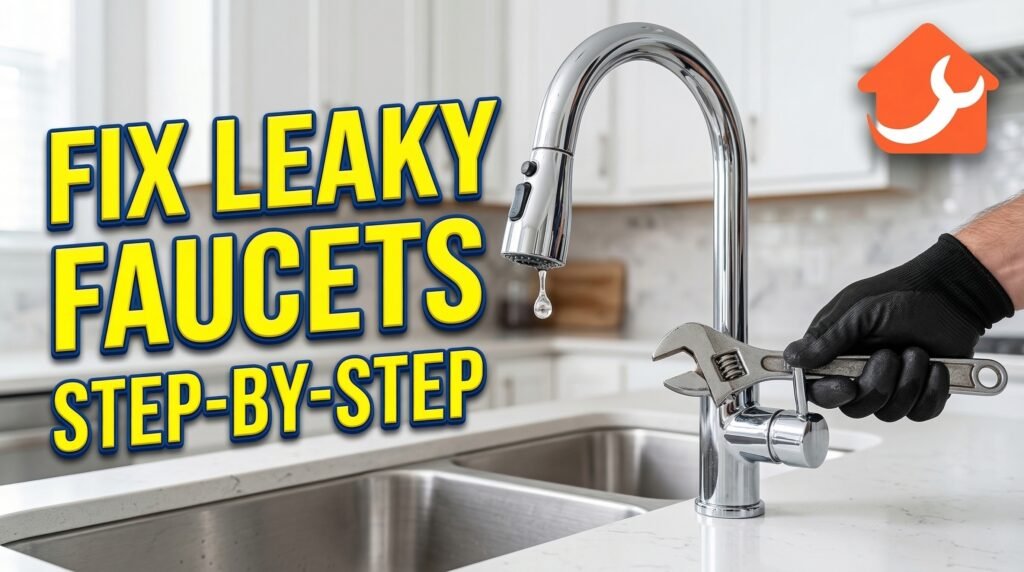
I still remember my first experience fixing the leaky faucet. I had a faucet in my bathroom, and it had been leaking for weeks. Everyone just ignored it, thinking it was too hard to fix. But then, I decided to learn and fix it myself one afternoon. It only took me 40 minutes to fix the faucet, and I learned it from watching some videos online. I found out that the cause of the leak was just a small rubber washer, smaller than a coin. I learned that fixing the faucet would cost me less than one dollar! It is really easy to fix a faucet, and all you need to do is to first identify the type of faucet you have, then turn off the water supply, replace the faulty part inside the faucet, and finally, put everything back together again. This process would only take you 30-60 minutes for the first time, but it would get faster and faster as you do it again and again! This is a step-by-step guide on fixing leaky faucets, and this guide includes all 4 types of faucets. All you need to do is look at your faucet and find out what kind of faucet you have. Don’t worry, it is really easy! Recognising the Causes of Faucet Leaks Before you begin reaching for that wrench, it’s nice to know what’s really going on with that leak. Well, let’s just say that all faucet leaks begin for only one reason: something inside the faucet is either damaged or no longer makes a perfect seal. What that something is will depend on what kind of faucet you have. In older compression-type faucets, it’s almost always the rubber washer. In cartridge-type faucets, it’s the cartridge itself. In ball-type faucets, it’s the little springs and seats that corrode. In ceramic disc-type faucets, it’s the ceramic discs that crack or are encrusted with mineral deposits. The good news is that all these parts are replaceable for between $3 and $20. In all cases, it’s less expensive than what it would cost to hire a plumber for one hour. Key Insight: “A dripping faucet can waste up to 3,000 gallons of water annually,” states the Environmental Protection Agency. “At current water rates, that’s a $20 to $35 annual increase in your water bills – and it’s all coming from a leaky faucet!” What You’ll Need — Tools and Materials Gather all of this before you start. You do not want to be halfway into disassembling a faucet and realize that you do not have a particular piece! Tools Materials Pro Tip: Take a picture of your faucet brand, which is normally located at the base of the faucet or on the faucet handle, and the old part you removed before you head to Home Depot. I always do this before I head to Home Depot, and it takes less than 2 minutes to find a replacement by showing it to a Home Depot Associate. Step 1. Identify Your Faucet Type There are 4 different types of common faucets used for homes in the US. Each has its installation procedure; therefore, it is important to know the type of faucet used in your home before carrying out any repair works to avoid purchasing the wrong parts. 1. Compression Faucet Separate handles for hot and cold water. You physically press (compress) a rubber washer against a seat every time you turn it off. These are the oldest types of faucets and are likely to leak more often. Replacing the rubber washer solves the problem most often and only costs $1. 2. Cartridge Faucet A faucet with either one handle or two works by opening and closing the cartridge inside with the turning of the handle. This type of faucet is ubiquitous in homes, particularly in bathrooms and kitchens. In case of leakage, it is caused by the cartridge’s deterioration and requires replacement. 3. Ball Faucet Another type of single-handle faucet is one that rotates over a rounded cap. For its use, one must turn left for hot water and right for cold water; it is controlled by turning it up and down. This type of faucet is commonly used in kitchen sinks. This type of faucet contains more parts, such as the spring, seat, and O-rings. Therefore, it is more difficult to repair compared to the other types of single-handle faucets. 4. Ceramic Disc Faucet A wide lever rests on top of a sturdy, flat, cylindrical body. These parts are surprisingly durable and leak-proof, which is good because the leak usually comes from mineral buildup on the ceramic discs and not because the parts are broken. Step 2. Turn Off the Water Supply This step is what keeps your repair from turning into a flood. Don’t skip it. Look under the sink, and you’ll find two small oval valves on the pipes coming from the wall, hot and cold. Turn both of these valves clockwise until they won’t turn any further. This shuts off water to this faucet alone, without affecting the rest of the house. Once you’ve done this, you can start running water to drain any pressure in the pipes. Keep it running and dripping until all is quiet. Then you can begin. Safety Note: If you find that the valves under your sink are stuck or stiff, don’t try to force them to turn. If they are corroded, they could snap or even crack, and you could end up with a flood. Pro Tip: If you cannot locate the shut-off valves under the sink, try to trace the water supply lines to the main water shut-off valve. This is usually located in the basement, utility room, crawl space, or outside the home near the foundation. Step 3. Remove the Faucet Handle With the water turned off, you can begin disassembling the handle to access the inner parts. Pro Tip: Before Disassembly, take a clean photo of the faucet’s interior. I learned this the hard way

Scroll to Top