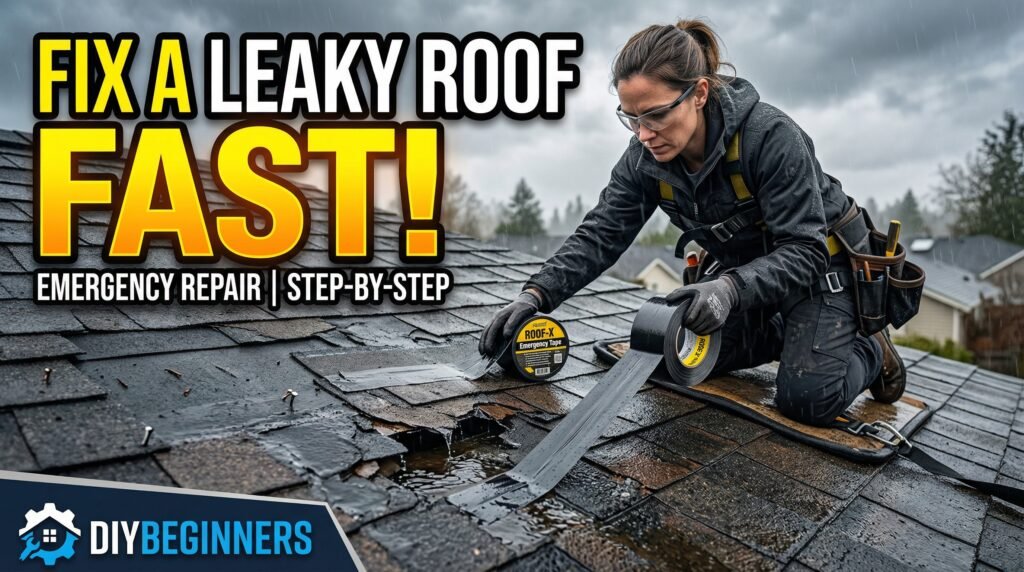
How to Fix a Leaky Roof (Emergency Patch + 4 Permanent Fixes for Beginners)
The most panic-inducing home repair is the roof leak, and it’s easy to see why. A roof leak equates to damage occurring right now, and the possible areas affected are the ceiling, insulation, drywall, and wood beneath the leak.What I’ve learned about the situation is that the vast majority of roof leaks are the result of simple, localized problems. This means the roof leak isn’t necessarily the result of the entire roof, but rather the result of a problem in one specific area on the roof. Many of these problems are completely fixable by anyone with the right materials and the right mindset, even if they’re a beginner. There are two sections to this guide: one on what to do immediately to stop water entering through the roof (the emergency patch), and another on how to locate and repair permanently the four most common causes of roof leaks. I’ll also let you know when a roof leak is too tricky for a beginner and needs to be done by a professional roof repairer.Safety note: Before we begin, here’s an important note on roof safety: every precautionary note in this roof repair manual is there for a reason. Please read the section on roof safety before attempting to go on your roof. Roof Safety — Read This First Working on a roof can be genuinely dangerous. Falling off a roof can result in thousands of serious injuries and deaths annually in the US, and this includes experienced roofers and contractors. This is not a section to skim.⚠️ Safety Warning: Don’t ever go on a roof if it’s wet, icy, or frosty. The roof will be slippery enough to cause a fall, even if the roof has a low pitch. Wait for dry weather. The roof will be there tomorrow, but your safety isn’t. ⦁ Only work on roofs with a pitch where you can walk comfortably. If the roof is steep enough where you have to hold on with both hands to walk on the roof, it’s too steep for the average DIYer. Call a professional.⦁ Use an extension ladder. Make sure it’s properly positioned (1 foot out for every 4 feet of rise), locked in place, and extend it at least 3 feet above the roof’s edge.⦁ Wear rubber-soled shoes. Running shoes or work boots with rubber soles will grip the roof much better than smooth-soled shoes.⦁ Never work on the roof by yourself. Make sure someone on the ground knows where you are and can call for help if necessary.⦁ Avoid the roof entirely if there are high winds. Even moderate winds make it much more hazardous to fall on the roof.⦁ Use a roof safety harness. They are available for purchase at Home Depot for between $40 and $60. They are worth every dollar for any roof with a steeper pitch than 6:12. 🔑 Key Insight: Most roof repairs that beginners can do can be accomplished without ever stepping foot on the roof by using ladders. If the leak is in an area of the roof that is close to the peak of the roof or is a steep area of the roof, it is best left to a licensed roofer. No roof repair is worth risking your life. Step 1: Emergency — Stop the Water Coming In Right Now However, if it is actively raining and water is entering your home currently, the priority is to prevent further damage inside the home until the time it is safe to handle the roof. Do not venture on the roof if it is wet.Inside the House — Protect Your Belongings ⚠️ Safety Warning: If the ceiling is significantly sagging or bowing under the weight of the water, leave that room and do not re-enter the room until the water drains out. This is because a water-logged ceiling can fall at any time, and falling plaster or drywall can cause serious injury. Emergency Roof Tarp — When Safe to Do So Once the rain has stopped and the roof is dry enough to walk on without damaging it further, the emergency tarp can be used to wait until a more permanent solution can be implemented. 💡 Pro Tip: In some cases, a tarp can last for weeks if put in correctly. This can give you time to have a professional assessment done, time to collect materials, and/or time for better weather to arrive. The important thing is to make sure it is secure. A flapping tarp does more harm than good. Step 2: Find the Source of the Leak The most important, yet most difficult, part of fixing a roof leak is to find where the leak is really occurring. Water will enter the roof in one place, but travel down the rafters before falling down through the ceiling in another place. The place where water falls down through the ceiling is rarely directly below where it entered the roof.Start From Inside the AtticOn a dry day, enter your attic with a flashlight. Look for water stains, or even daylight coming through the roof deck. Water stains on the rafters or roof deck will indicate where water is entering. Look up the roof in that place to find where water is really coming in. Water stains will run down the roof. The place where water is really coming in will have the water stain highest up. The Garden Hose TestIn the event the location of the leak is not visible inside, the garden hose test should be conducted on a dry day. One should remain inside the attic, calling out when he or she sees water. The second person should soak the roof with the garden hose, working his or her way up the roof. Each area should be soaked for 2 or 3 minutes before moving on to the next area. If the person inside the attic sees water, the location has been found. Common Leak Sources to Check First⦁ Flashing – The flashing on chimneys, skylights, and